
媳妇的美好时代
Black student suspended over his hairstyle to be sent to an alternative education program_我的网站

一 | After serving more than a month of in-school suspension over his dreadlocks, a Black student in Texas was told he will be removed from his high school and sent to a disciplinary alternative education program on Thursday.Darryl George, 18, is a junior at Barbers Hill High School in Mont Belvieu and has been suspended since Aug. 31. He will be sent to EPIC, an alternative school program, from Oct. 12 through Nov. 29 for “failure to comply” with multiple campus and classroom regulations, the principal said in a Wednesday letter provided to The Associated Press by the family.Principal Lance Murphy wrote that George has repeatedly violated the district's “previously communicated standards of student conduct." The letter also says that George will be allowed to return to regular classroom instruction on Nov. 30 but will not be allowed to return to his high school's campus until then unless he's there to discuss his conduct with school administrators.Barbers Hill Independent School District prohibits male students from having hair extending below the eyebrows, ear lobes or top of a T-shirt collar, according to the student handbook. Additionally, hair on all students must be clean, well-groomed, geometrical and not an unnatural color or variation. The school does not require uniforms.George's mother, Darresha George, and the family's attorney deny the teenager's hairstyle violates the dress code. The family last month filed a formal complaint with the Texas Education Agency and a federal civil rights lawsuit against the state’s governor and attorney general, alleging they failed to enforce a new law outlawing discrimination based on hairstyles. The family alleges George's suspension and subsequent discipline violate the state’s CROWN Act, which took effect Sept. 1. The law, an acronym for “Create a Respectful and Open World for Natural Hair,” is intended to prohibit race-based hair discrimination and bars employers and schools from penalizing people because of hair texture or protective hairstyles including Afros, braids, dreadlocks, twists or Bantu knots. A federal version passed in the U.S. House last year, but was not successful in the Senate.The school district also filed a lawsuit in state district court asking a judge to clarify whether its dress code restrictions limiting student hair length for boys violates the CROWN Act. The lawsuit was filed in Chambers County, east of Houston.George’s school previously clashed with two other Black male students over the dress code. Barbers Hill officials told cousins De’Andre Arnold and Kaden Bradford they had to cut their dreadlocks in 2020. Their families sued the district in May 2020, and a federal judge later ruled the district’s hair policy was discriminatory. Their pending case helped spur Texas lawmakers to approve the state’s CROWN Act. Both students withdrew from the school, with Bradford returning after the judge’s ruling. ___AP journalist Juan Lozano contributed to this report from Houston.___The Associated Press education team receives support from the Carnegie Corporation of New York. The AP is solely responsible for all content.。
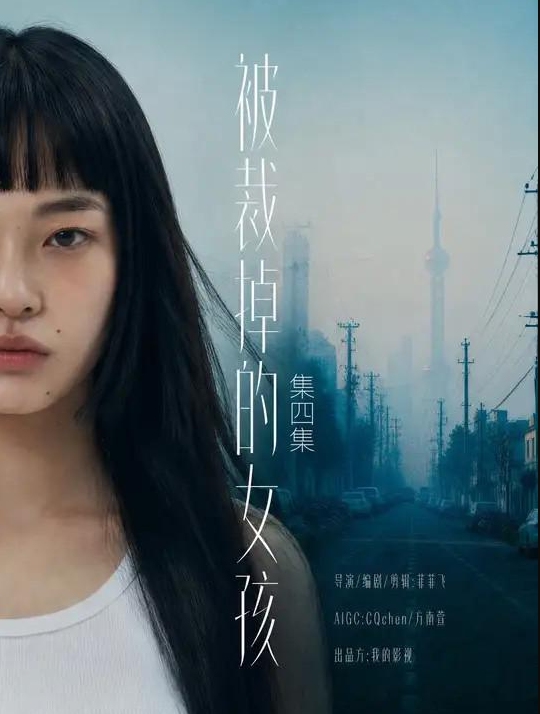
Fang Taozi, an AI-generated character who stars in the hit AI short drama series The Girl Who Was Fired, has posted lifestyle vlogs, launched social media accounts, shared her breakfasts, workouts and pets, landed brand deals and has a fanbase.
Since the drama debuted on short video platform Douyin on June 12, it has accumulated 200 million views. Fang's Douyin account has attracted more than 400,000 followers.
Fans interact with her as if she were a real celebrity, creating fan edits, discussing fictional relationships and building a community around her imagined life.
This raises a question that has become increasingly urgent for the entertainment industry: Does Fang Taozi represent the first generation of AI celebrities? The answer depends on how "celebrity" is defined, said Zhang Peng, a cultural researcher and associate professor at Nanjing Normal University, in an interview.
If celebrity status is measured by public attention, emotional connection and commercial value, Fang appears to meet many of the criteria. She has fans, a personal brand and even advertising opportunities.
Whether AI can truly become stars depends not on the technology itself, but on their ability to forge genuine emotional connections with audiences and sustain their appeal over time, added Zhang.
However, Shi Wenxue, a Beijing-based cultural critic, argues that AI stars have indeed emerged, but they should be viewed as part of the broader lineage of virtual idols.
From the 1958 US virtual musical group Alvin and the Chipmunks to Hatsune Miku, Luo Tianyi and the hyper-realistic digital human Liu Yexi, virtual performers have existed in various forms for decades.
From the perspective of how she is created, Fang Taozi represents a technological advance. Her emergence is largely a product of the current economic environment of the film and television industry.
The rise of AI performers has also triggered concerns among human actors, especially those working in smaller productions.
Human performers bring personal experience, emotional interpretation and unpredictability - qualities that remain difficult to reproduce. But for industries that require large volumes of affordable content, AI characters offer obvious advantages: They do not age, can work continuously and can be customized for different audiences.
AI short dramas are cheaper, faster and free from the risks associated with human performers, raising concerns over the future of lower-level entertainment jobs in areas such as short dramas, advertising, background acting and voice work, said Zhang.
In Shi's view, beneath the debate lies a familiar tension: technological efficiency versus the threat of displacement for human workers.
The question is not whether AI will completely replace actors, but which parts of acting and entertainment can be automated, he noted.
Rather than presenting an AI figure only as a digital image, Chinese platforms appear to be building complete entertainment ecosystems around AI characters, including dramas, social accounts, fan interactions and commercial partnerships.
China's AI stars have grown out of the audience's desire for emotional companionship, while Hollywood's AI experiments have been shaped by industry battles over efficiency and costs, noted Zhang.
According to Shi, Fang Taozi's sudden popularity is, in many ways, a reflection of audience psychology. Whether they are moviegoers, fans or casual viewers, audiences have grown weary of formulaic content, scripted fan service, predictable performances and fragile celebrity personas. An idol like Fang Taozi offers an alternative: She cannot be involved in scandals, play diva or break character, and her persona can be adjusted to meet audience demands. But the model also comes with risks, particularly the limitations of its creators and the potential for excessive commercialization.
。

二 |
Current article:http://pqzat4.chengjuecannaobianmouqueduoyu.shop/2xg/20260826/439899.html
Published on:13:49:21